

I work in dementia care as a senior living consultant—a job I invented for myself that I have been doing since 2016. In short, my company, Dementia By Day, provides consulting for senior living companies who want to elevate their memory care buildings’ offerings while improving staff & family education.
People tend to think my entire day is made up of educating people about dementia. While that is certainly at least 40% of my day (most days) the rest of the time is spent working on/in the business I built.
This misunderstanding is also probably why I encountered a challenge early into looking for a publisher for my book.
I already have three books published with Johns Hopkins University Press.
All three books are about dementia. When someone asks if I’m writing another dementia care book, I’ll often say, “No, my trilogy is complete!”
I love talking about dementia care, but I also love talking about business.
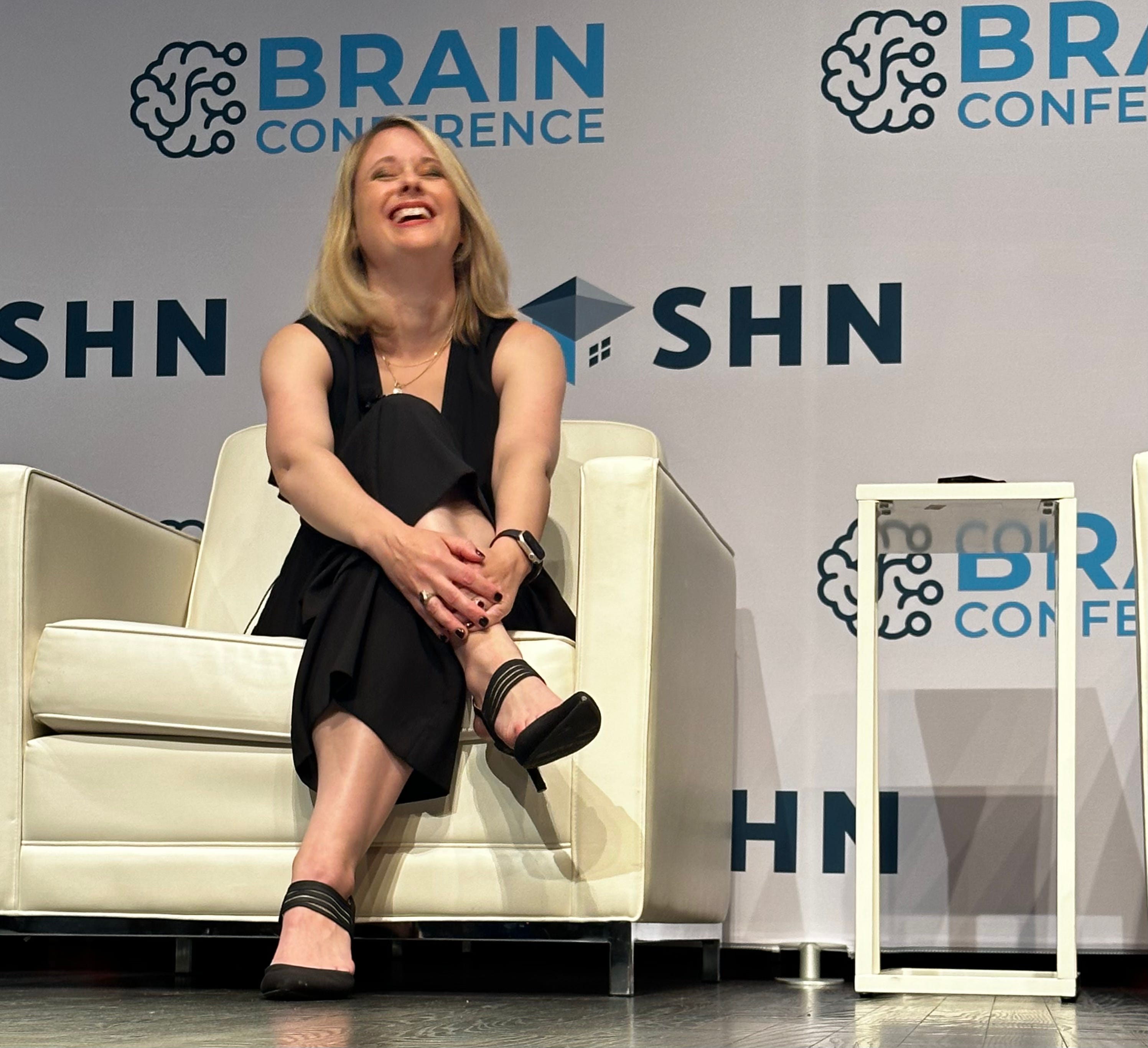
Because I have such a niche, however, I’ve found that my work has often been “pigeon-holed” to where I feel I’m only allowed to talk about dementia care.
That’s why I decided I wanted to finally start working on a fourth book. This one, though, was to be a business memoir: somewhere I could finally share all of my stories about running my small, B2B, service-based consulting agency. (Wow, what a mouthful.)
As I wrote, I also began looking for book agents to represent me.
Much to my excitement, one agent responded only a few days after receiving my proposal. “I’ve been waiting for someone to write a book like this!” she told me.
Our first call went great. I was thrilled: maybe she was “the one” for me and would help this project get to the right publisher. She seemed to understand what it was that I wanted to accomplish with the book.
“I just need to talk with my boss,” she told me, “but I think he’ll be on-board. You already have three published books, so that really helps!”
A couple of weeks later, she requested a second call.
“Hey Rachael,” she said, “My boss wasn’t sure about your ability to get this book to publishers. He feels like, since you’re an expert in dementia, why not write another book about dementia instead of this one?”
My heart sank.
“I already have three books on dementia,” I said weakly. “I don’t want to write another one, and honestly, I don’t have another dementia care book in me. I want to write a business memoir.”
Was she really bailing on this idea after one conversation with her boss?
“Sure, but you could make this one funny!” she exclaimed. “My boss had this great idea about making it a funny book about dementia. I know you want to write a comical book, and this could be it.”
I felt as though the wind had been knocked out of me.
“…a funny book…about dementia?” I tried to control my voice. “Dementia isn’t funny. It’s a group of brain diseases.”
I knew that this agent and her boss knew nothing about dementia, but did they really not see how this suggestion was completely insensitive?

“I have a client who was terminally ill and she wrote a funny book about being terminally ill,” the agent went on. “You could call it, ’Coping With People Who Are Losing Their Minds’ or something.”
I moved from frustrated to enraged: this was a terrible idea for a book and her idea for a title was even worse than the idea itself.
I tried to keep my voice level and did my best to compose myself, because I knew that her suggestions were not born of meanness, but of pure ignorance about dementia.
“Okay, but I don’t have dementia,” I sighed. “There would be literally no way to write that book without punching down. It would come off as really condescending and mean,” I explained. “I have zero desire to write that book. Also, people living with dementia aren’t ‘losing their minds,’ they’re losing some of the gains they’ve made in their lives due to a group of brain diseases.”
I knew I was shouting into the wind at this point, but I couldn’t stop myself from trying to explain why and how her “suggestion” was so awful.
“Oh, okay,” the agent seemed to shrug, ignoring the ton of bricks that she’d just dropped on my chest.
“The challenge we’re having is that you are an expert in dementia, not business,” she continued.
“But I’ve been running a business since 2014,” I started. “It just happens to be in the niche of dementia care. I am certainly an expert at running a small consulting business.”
“Yes, but you’ve never been a business coach,” she explained.
Is she really not understanding what I’m saying? I thought. I really believed that we were on the same page during that first call, but I guess I was wrong.
“That’s kind of the whole thing I’m talking about in the book, though,” I countered. “I don’t want people to randomly become coaches to coach other coaches. Consulting consultants to consult consultants on consulting.”
I don’t remember what else we talked about after that. My brain was loud and my hands were shaking from adrenaline. I felt utterly defeated and frustrated: she just didn’t understand what I was trying to do.
The major thesis of my book is, “Think twice before starting your own business.”
The agent was essentially telling me that because I didn’t have a business about having a business, I was not an “expert” in business ownership.
Did she really not grasp the irony?
It sounded like she and her boss only believed that people who were coaching or consulting on “business” to be “business experts.” Did running a successful business for over a decade not make me enough of an expert? Yes, I am an expert in dementia, but I know more than just dementia care.
When you’re the owner of a small business, there is so much you have to know and do and plan ahead for that has literally nothing to do with your niche.
But it’s hard to explain that to someone outside of the entrepreneurial world.
“I want to do what you do, Rachael! It’s so cool that you work for yourself. How do I get started?”
I receive messages like this on a regular basis.
It’s—at least in part—what inspired me to start this Substack and write my fourth book. Unfortunately, most of the people who write me messages like this one have no idea what I actually do all day. They see me being my own boss and think, “Damn, how do I get out of the corporate grind and do my own thing, too? Time freedom, baby!”
What they don’t realize, of course, is that true self-employment is much like becoming the corporate grind. You aren’t taking yourself out of the rat race: you’re building your own unique mousetrap. And, if you don’t add people and processes to assist you with the day-to-day, you’re going to be the one trapped.
I love what I do for a living. I also love talking about business.
Here’s to building your own path, even when not everyone understands where you’re going.

